Conversation


|
run-ci: [all, hlt] |

|
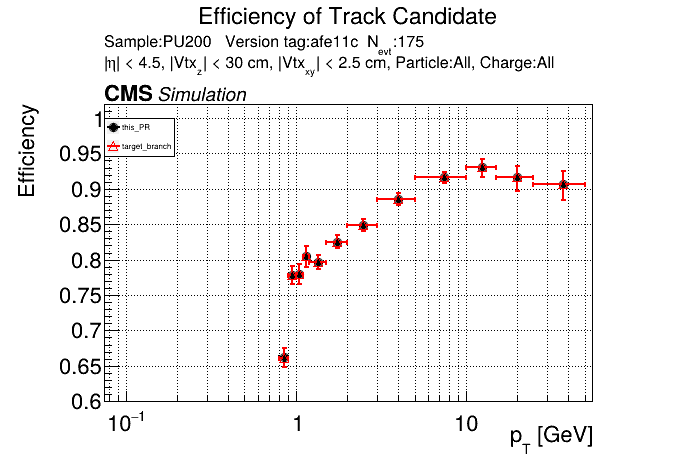
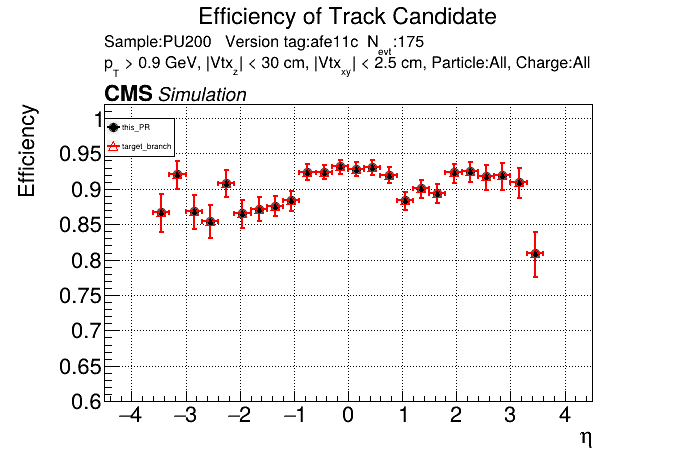
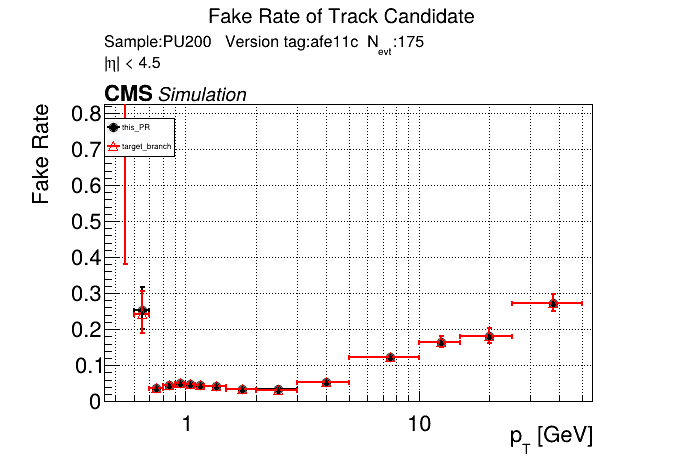
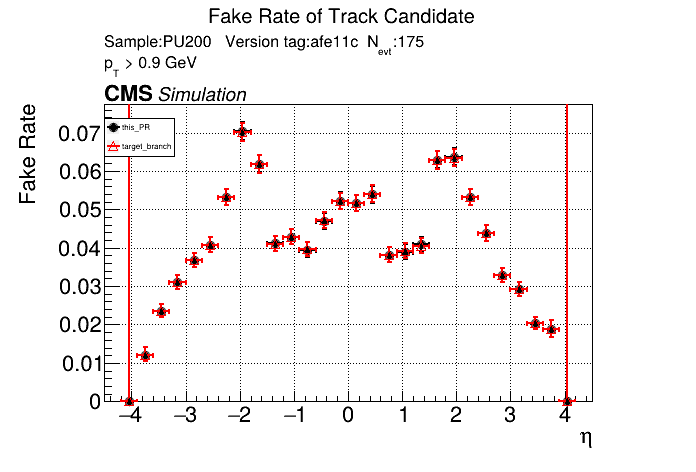
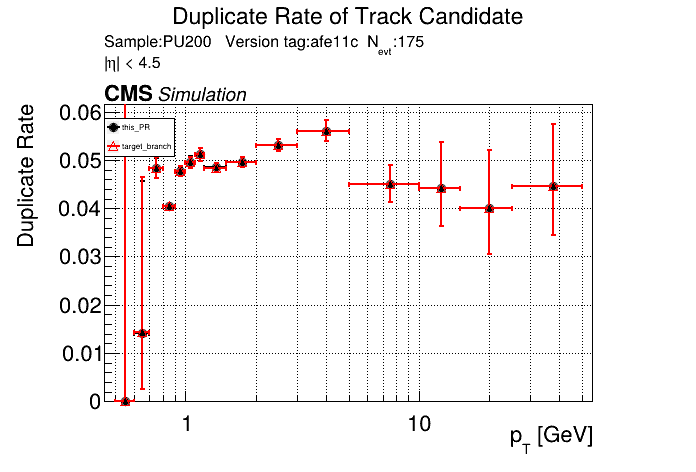
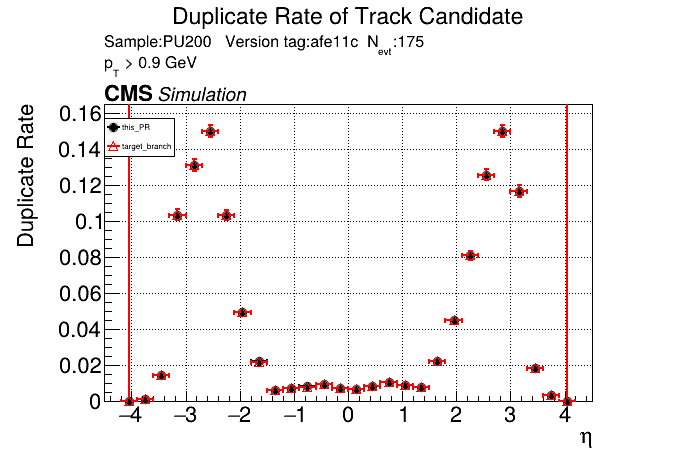
The PR was built and ran successfully in standalone mode running on CPU. Here are some of the comparison plots.
The full set of validation and comparison plots can be found here. Here is a timing comparison: |
|
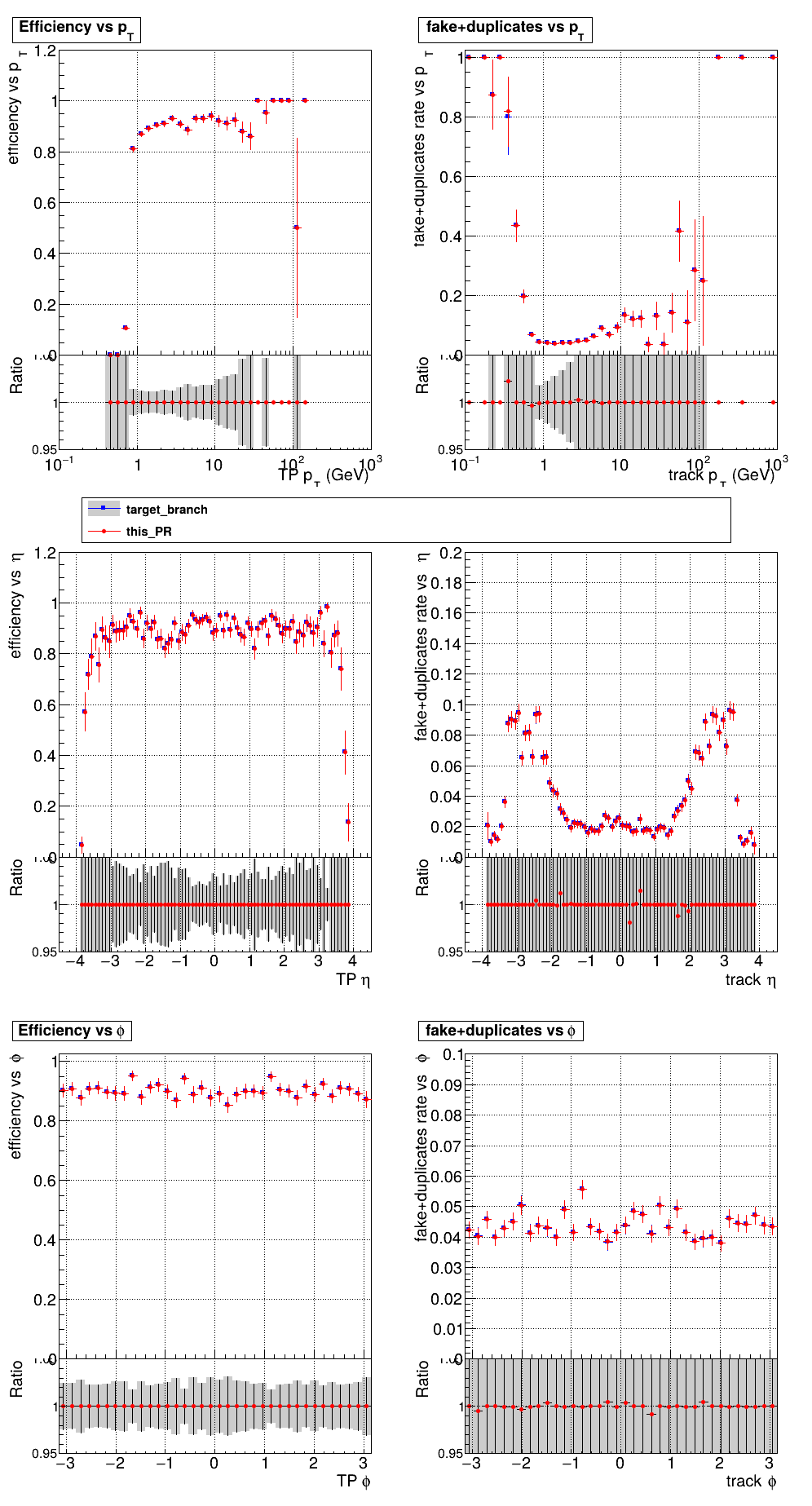
The PR was built and ran successfully with CMSSW running on CPU. Here are some plots. OOTB All Tracks
The full set of validation and comparison plots can be found here. |
|
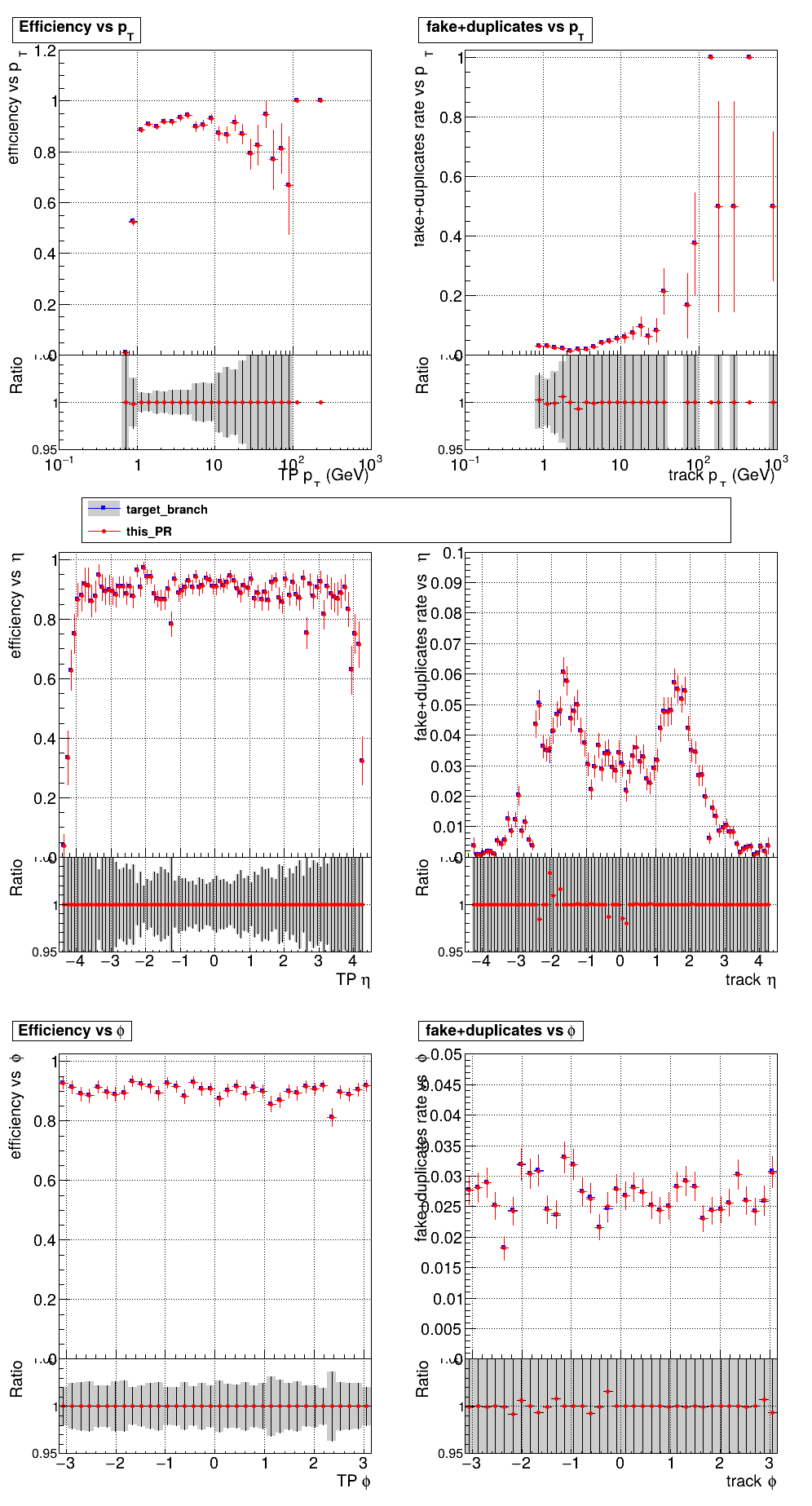
The PR was built and ran successfully with HLT setup running on CPU (procModifiers = ). Here are some plots. HLT General Plots
The full set of validation and comparison plots can be found here. |

| // Module-level eta/phi pre-check: skip module pairs that are too far apart. | ||
| if (alpaka::math::abs(acc, modules.eta()[lowmod1] - modules.eta()[lowmod2]) > 0.3f) | ||
| continue; | ||
| if (alpaka::math::abs(acc, cms::alpakatools::deltaPhi(acc, modules.phi()[lowmod1], modules.phi()[lowmod2])) > | ||
| 0.5f) | ||
| continue; |

There was a problem hiding this comment.
was it tested on the µcube? 50 cm should be safe enough.
How was this check derived, from printouts or some other way?
There was a problem hiding this comment.
would it make a difference to loop over the connected modules instead of all nEligibleT5Modules?
| template <alpaka::concepts::Acc TAcc> | ||
| ALPAKA_FN_ACC ALPAKA_FN_INLINE float clampedApproxSin(TAcc const& acc, float x) { | ||
| return alpaka::math::min(acc, x, kSinAlphaMax); | ||
| } | ||
|
|
||
| // Small-angle sin approximation: sin(x) ~ x for x after tight angular cuts. | ||
| ALPAKA_FN_ACC ALPAKA_FN_INLINE float fastSin(float x) { return x; } | ||
|
|
||
| // Small-angle Pade approximant of tan(x)/x. | ||
| ALPAKA_FN_ACC ALPAKA_FN_INLINE float fastTanOverX(float x) { return 1.f + x * x / 3.f; } |
There was a problem hiding this comment.
can these be ifdef to the full precision, if we were to recompile and test.
Approx should probably be in all names (perhaps instead of fast)
2 participants


I will add more tomorrow, and a breakdown of the changes. Gives a 15% improvement in short time.
Master Timing

This PR Timing
