Detail report that lists each item and the associated costs to be recognized as part of total unit cost of producing the item.
Ledger, Organization Code, Cost Type, Category Set 1, Category Set 2, Category From, Category To, Item, Item From, Item To, Exclude Items with no Cost Details
cst_activities, gl_ledgers, fnd_currencies, org_organization_definitions, mtl_parameters, cst_item_costs, cst_cost_types, cst_item_cost_details, mtl_system_items_vl, mtl_units_of_measure_vl, mtl_item_status_vl, bom_resources, org_access_view
CAC Item Cost Break-Out by Activity
If you would like to try one of these Oracle EBS SQLs without having Blitz Report installed, note that some of the reports require functions from utility package xxen_util.
CST Detailed Item Cost 25-Jun-2019 140038.xlsx
www.enginatics.com/reports/cst-detailed-item-cost/
Blitz Report™ import options
The CST Detailed Item Cost report is a vital analytical tool for manufacturing and supply chain finance professionals. It provides a granular breakdown of the cost structure for inventory items, detailing the specific components—such as material, labor, resources, and overhead—that comprise the total unit cost. This level of detail is essential for accurate product pricing, margin analysis, and cost variance investigation.
In complex manufacturing environments, understanding the "true" cost of a product is often challenging. Organizations struggle with:
- Margin Visibility: Without a clear understanding of cost components, it is difficult to set prices that ensure profitability or to identify products that are eroding margins.
- Cost Driver Analysis: When unit costs increase, finance teams need to pinpoint whether the rise is due to raw material price hikes, increased labor hours, or higher overhead allocations.
- Standard Cost Maintenance: Validating that standard costs are correctly set up before a new period begins requires a detailed audit of all cost elements.
- Inventory Valuation: Ensuring that the inventory value on the balance sheet accurately reflects the cost of goods requires rigorous validation of item costs.
The CST Detailed Item Cost report solves these problems by offering deep visibility into item costing:
- Component-Level Breakdown: Lists each item and breaks down its cost into specific elements (e.g., Material, Material Overhead, Resource, Outside Processing, Overhead), providing a complete DNA of the product cost.
- Cost Type Flexibility: Allows users to analyze costs for different Cost Types (e.g., "Frozen" for current standard costs, "Pending" for future costs, or "Average" for actual costing), facilitating "what-if" analysis and period-end updates.
- Category Analysis: Supports filtering by Item Categories, enabling category managers to review cost structures for entire product lines at once.
- Efficiency: The "Exclude Items with no Cost Details" parameter helps keep the report focused on active, costed items, reducing noise in the data.
The report extracts data from the Oracle Cost Management module, linking item definitions with their cost details.
- Core Tables:
CST_ITEM_COSTS: The header table for item costs, storing the total unit cost for an item in a specific organization and cost type.CST_ITEM_COST_DETAILS: The detail table that holds the individual cost elements (e.g., the specific cost of steel vs. plastic for a component).CST_COST_TYPES: Defines the set of costs being viewed (e.g., Frozen, Average, Pending).MTL_SYSTEM_ITEMS_VL: Provides item descriptions and attributes.ORG_ORGANIZATION_DEFINITIONS: Identifies the inventory organization.
- Key Logic:
- The report joins item master data with cost tables based on
Inventory_Item_IdandOrganization_Id. - It filters by the selected
Cost_Type_Idto ensure the user sees the specific version of the cost they requested. - It aggregates detailed costs to match the total unit cost found in the header table.
- The report joins item master data with cost tables based on
Q: Can I use this report to compare my current standard costs with next year's proposed costs? A: Yes, you can run the report twice—once for the "Frozen" cost type (current) and once for your "Pending" cost type (proposed)—and compare the outputs to analyze the impact of cost changes.
Q: Does this report show costs for all organizations? A: The report is typically run for a specific "Organization Code" to provide a focused view, as costs for the same item can vary significantly between different manufacturing plants or warehouses.
Q: Why do some items appear with zero cost? A: This could happen if the item is new and hasn't been costed yet, or if it's an expense item. You can use the "Exclude Items with no Cost Details" parameter to hide these from the report.
Q: Does it include overheads? A: Yes, the report details all cost elements, including material overheads and resource overheads, provided they are defined in the cost structure.
Oracle E-Business Suite Reporting Library
We provide an open source Oracle EBS SQLs as a part of operational and project implementation support toolkits for rapid Excel reports generation.
Blitz Report™ is based on Oracle EBS forms technology, and hence requires minimal training. There are no data or performance limitations since the output files are created directly from the database without going through intermediate file formats such as XML.
Blitz Report can be used as BI Publisher and Oracle Discoverer replacement tool. Standard Oracle BI Publisher and Discoverer reports can also be imported into Blitz Report for immediate output to Excel. Typically, reports can be created and version tracked within hours instead of days. The concurrent request output automatically opens upon completion without the need for re-formatting.
The Filters, Columns, Rows and Values fields are used to create and deliver the data in pivot table format with full drill down to details.
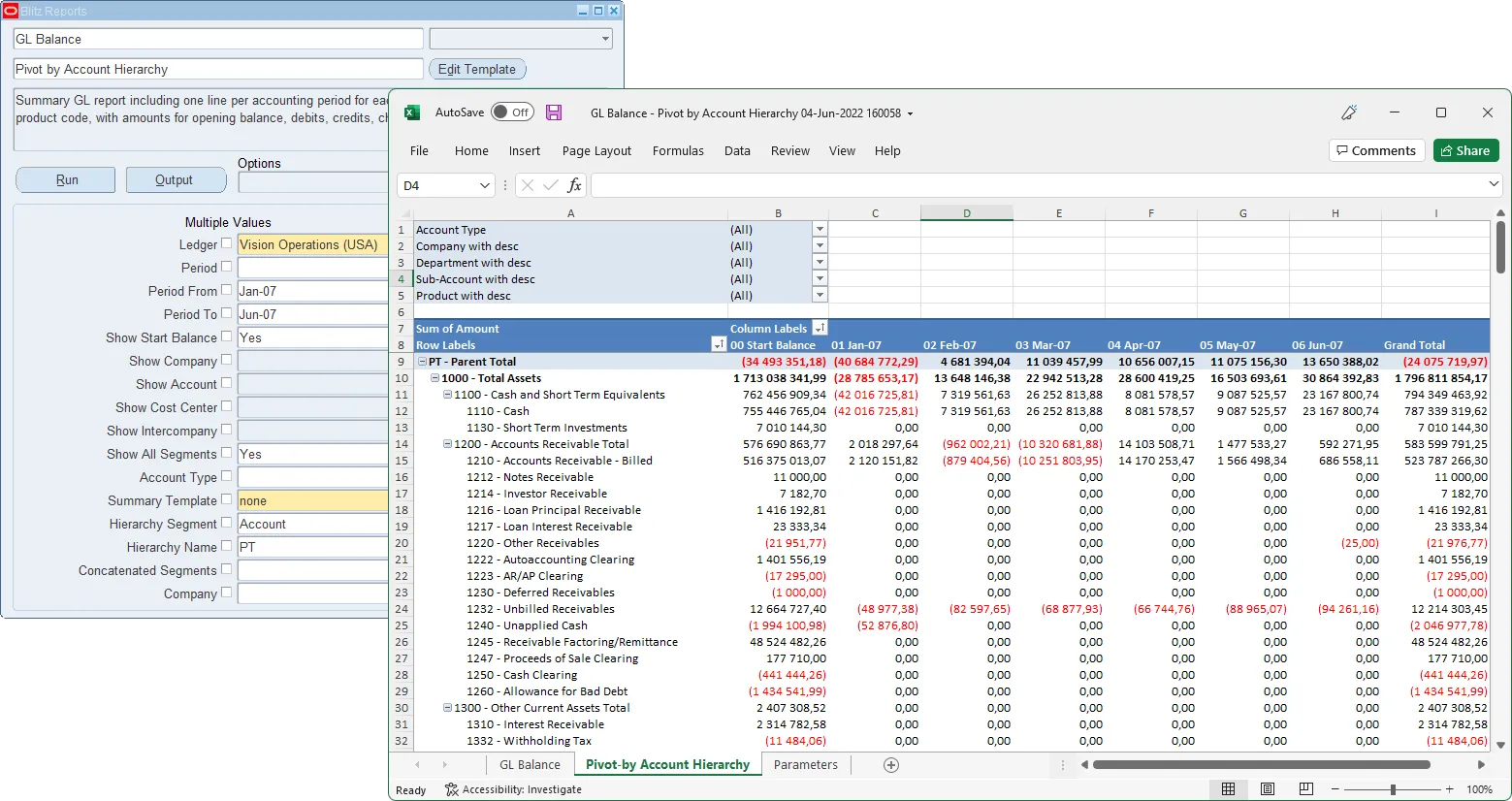
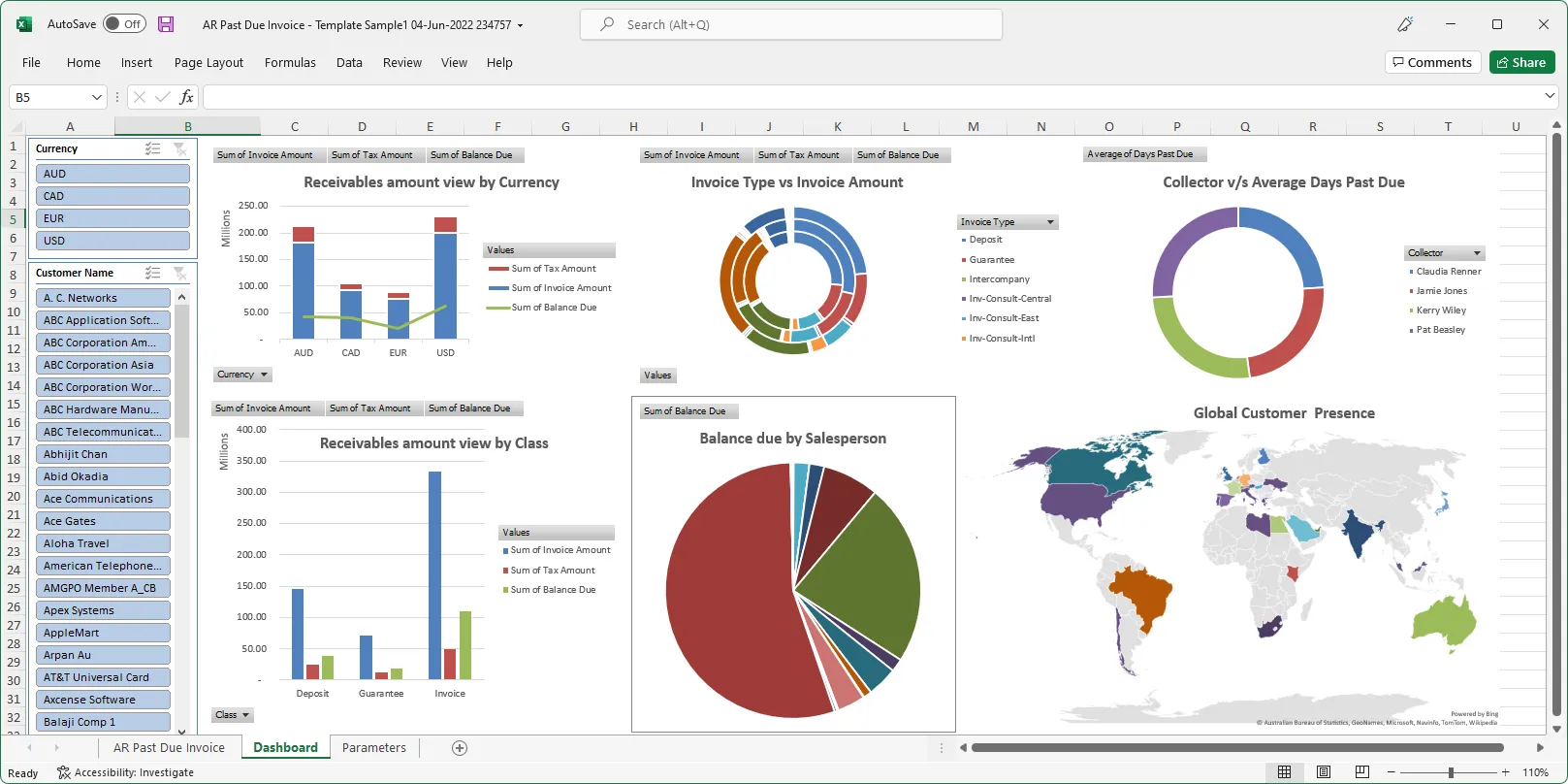
The Excel template upload functionality in Blitz Report allows users to create their own layouts by uploading an Excel template with additional sheets and charts, automatically refreshed when the report runs again. This allows to create custom dashboards and more advanced visualizations of report data.
You can download and use Blitz Report free of charge for your first 30 reports.
The installation and implementation process usually takes less than 1 hour; you can refer to our installation and user guides for specific details.
If you would like to optimize your Oracle EBS implementation and or operational reporting you can visit www.enginatics.com to review great ideas and example usage in blog. Or why not try for yourself in our demo environment.
Blitz Report™ – World’s fastest data upload and reporting for Oracle EBS
Oracle Discoverer replacement – importing worksheets into Blitz Report™
Blitz Report™ Questions & Answers
Supply Chain Hub by Blitz Report™
© 2025 Enginatics