Master data report showing organizations, classifications, address details and additional information attributes.
Business Group, Organization Name, Country, Organization Type, Classification, Internal or External, Show Attributes, Information Type, Attribute Name, Show active only, Expand Classifications
per_all_assignments_f, hr_all_organization_units_vl, hr_locations_all, fnd_territories_vl, hr_organization_information, hr_org_info_types_by_class, fnd_descr_flex_col_usage_vl, hr_org_information_types, mtl_parameters
If you would like to try one of these Oracle EBS SQLs without having Blitz Report installed, note that some of the reports require functions from utility package xxen_util.
PER Organizations 03-Jul-2020 135719.xlsx
www.enginatics.com/reports/per-organizations/
Blitz Report™ import options
The PER Organizations report is a critical master data and configuration audit tool for Oracle Human Resources. It provides a comprehensive listing of all organizations defined within the system, along with their classifications, address details, and various additional information attributes. This report is indispensable for HR administrators, system configurators, and auditors to manage the foundational building blocks of an enterprise structure, ensuring accuracy, compliance, and consistency across all organizational entities.
Organizations are complex, with various departments, legal entities, business units, and inventory organizations all needing to be accurately represented in the HR system. Managing this diverse set of organizational data presents several challenges:
- Fragmented Information: Details about an organization, such as its classification (e.g., HR Organization, Legal Employer, Inventory Organization), address, and specific attributes, are often scattered across multiple forms in Oracle EBS.
- Data Inconsistency: Manual data entry and lack of a consolidated view can lead to inconsistencies in organizational data, causing issues in payroll, inventory management, financial reporting, and security configurations.
- Difficult Auditing: Auditing organizational setups for compliance (e.g., ensuring all legal entities are correctly classified) or for system integrity (e.g., verifying address details for all operating units) is a time-consuming and complex manual process.
- Impact on Cross-Functional Processes: Organizations are fundamental to how transactions flow through an ERP system. Errors in their setup can cascade into problems in purchasing, sales, manufacturing, and financial accounting.
This report offers a consolidated, detailed, and easily auditable view of all organizational setups, streamlining HR and system administration tasks.
- Comprehensive Organizational Data: It brings together all relevant details for each organization—name, classification, address, and additional attributes—into a single, easy-to-read report, providing a holistic view.
- Simplified Configuration Audit: HR system administrators and auditors can use this report to quickly review and verify organizational setups, ensuring correct classifications, valid addresses, and adherence to company standards.
- Enhanced Data Quality: By providing a clear overview, the report helps in identifying and correcting data inconsistencies proactively, improving the overall quality and reliability of foundational organizational data.
- Supports Cross-Functional Alignment: The report can be used by teams across HR, Finance, and Operations to ensure a shared understanding of organizational definitions and their impact on various business processes.
The report queries core Oracle HR tables that define organizations and their associated details.
- Primary Tables Involved:
hr_all_organization_units_vl(the central view for organization definitions, including names and internal IDs).hr_organization_information(stores various classifications and additional attribute details for each organization).hr_locations_all(for address details of organizations).fnd_territories_vl(for country names).hr_org_information_typesandhr_org_info_types_by_class(for defining and linking various organizational information types).
- Logical Relationships: The report starts with
hr_all_organization_units_vlto list all organizations. It then performs joins tohr_locations_allto retrieve address information and tohr_organization_informationto pull in detailed classifications and other descriptive attributes. TheExpand Classificationsparameter likely controls how these classifications are presented in the report output.
The report offers a rich set of parameters for targeted organizational analysis:
- Business Group: Filters the report to a specific legal entity or organizational grouping.
- Organization Identification:
Organization NameandOrganization Typeallow for filtering by specific entities or categories of organizations. - Geographic Filter:
Countryenables analysis of organizations in particular regions. - Classification and Attributes:
Classification,Information Type, andAttribute Nameallow for deep dives into specific organizational characteristics.Show AttributesandExpand Classificationsare key for controlling the level of detail. - Show active only: Focuses the report on currently active organizations.
As a master data report, it is optimized for efficient retrieval of configuration data.
- Indexed Joins: The queries leverage standard Oracle indexes on
organization_id,location_id, and other primary keys for fast joins between the various HR setup tables. - Parameter-Driven Scope: The extensive filtering parameters are crucial for performance, allowing users to limit the data retrieved to only the organizations and attributes of interest, preventing the report from attempting to process an excessively broad dataset.
1. What is an 'Organization Classification' and why is it important? An 'Organization Classification' defines the role or type of an organization (e.g., 'HR Organization', 'Legal Employer', 'Inventory Organization', 'Operating Unit'). A single organization can have multiple classifications. These classifications are critical because they dictate how an organization behaves in different Oracle modules and which functionalities are enabled for it.
2. How can I use this report to verify an organization's legal entity status?
You can filter the report by Classification = 'Legal Employer' (or similar, depending on configuration). This will show you all organizations that are defined as legal entities in your system, allowing you to verify their details and ensure compliance with legal and financial reporting requirements.
3. What is the purpose of 'Show Attributes' and 'Information Type' parameters? These parameters allow you to dynamically include or filter for specific Descriptive Flexfield (DFF) or Extra Information Type (EIT) attributes that are stored against an organization. This is crucial for reporting on client-specific data points that are not part of Oracle's standard organization fields.
Oracle E-Business Suite Reporting Library
We provide an open source Oracle EBS SQLs as a part of operational and project implementation support toolkits for rapid Excel reports generation.
Blitz Report™ is based on Oracle EBS forms technology, and hence requires minimal training. There are no data or performance limitations since the output files are created directly from the database without going through intermediate file formats such as XML.
Blitz Report can be used as BI Publisher and Oracle Discoverer replacement tool. Standard Oracle BI Publisher and Discoverer reports can also be imported into Blitz Report for immediate output to Excel. Typically, reports can be created and version tracked within hours instead of days. The concurrent request output automatically opens upon completion without the need for re-formatting.
The Filters, Columns, Rows and Values fields are used to create and deliver the data in pivot table format with full drill down to details.
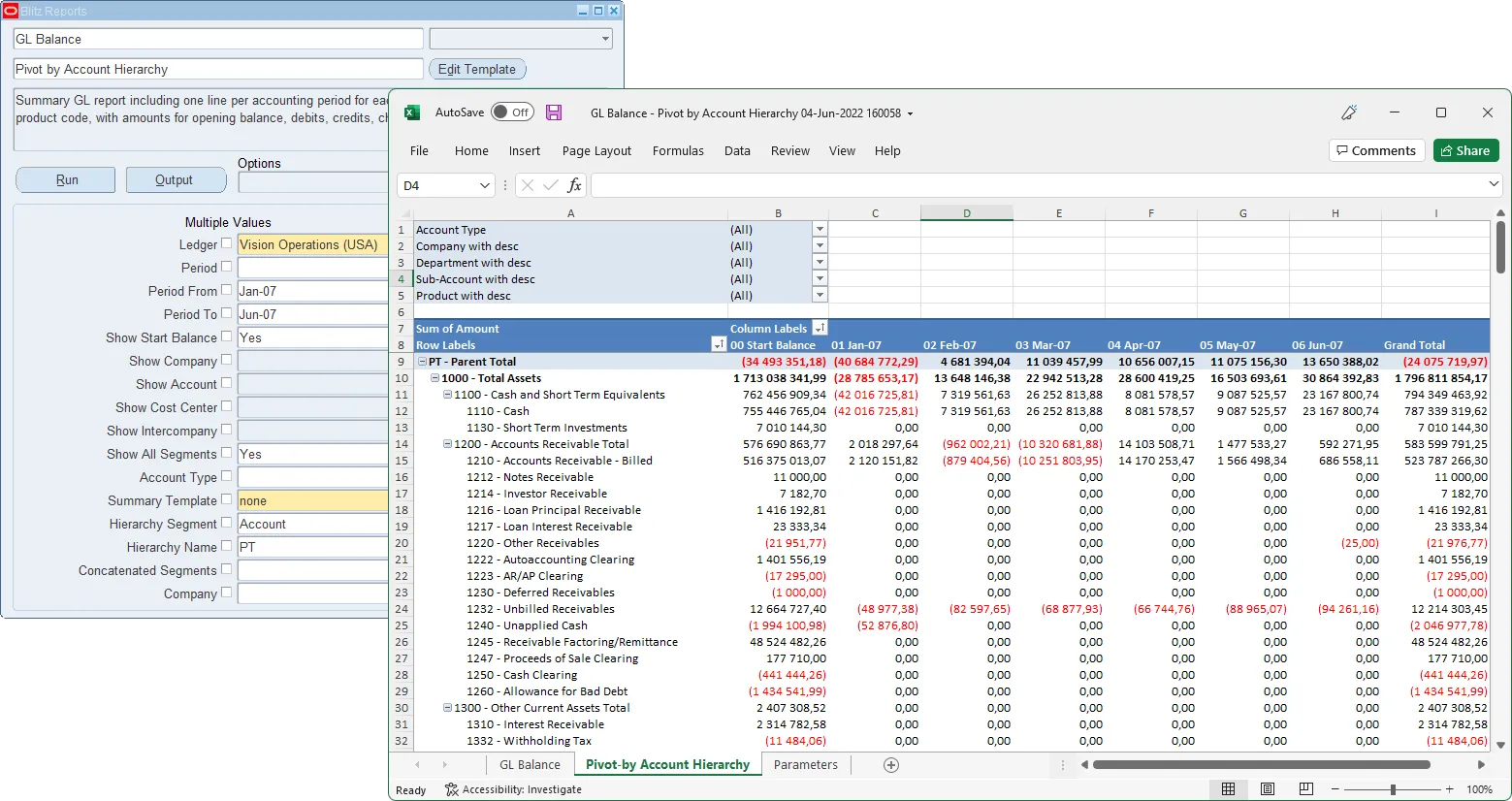
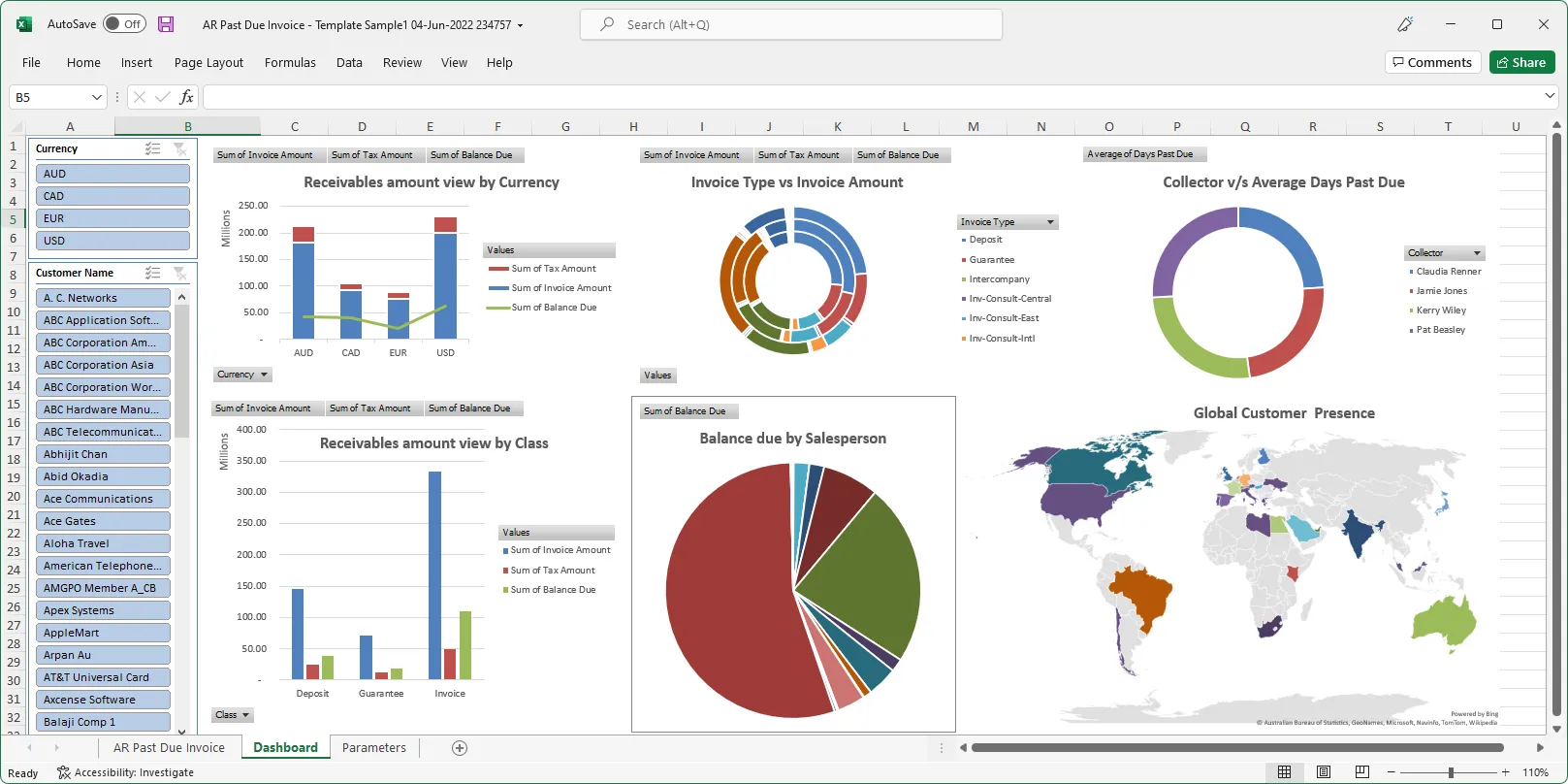
The Excel template upload functionality in Blitz Report allows users to create their own layouts by uploading an Excel template with additional sheets and charts, automatically refreshed when the report runs again. This allows to create custom dashboards and more advanced visualizations of report data.
You can download and use Blitz Report free of charge for your first 30 reports.
The installation and implementation process usually takes less than 1 hour; you can refer to our installation and user guides for specific details.
If you would like to optimize your Oracle EBS implementation and or operational reporting you can visit www.enginatics.com to review great ideas and example usage in blog. Or why not try for yourself in our demo environment.
Blitz Report™ – World’s fastest data upload and reporting for Oracle EBS
Oracle Discoverer replacement – importing worksheets into Blitz Report™
Blitz Report™ Questions & Answers
Supply Chain Hub by Blitz Report™
© 2025 Enginatics