Result cache statistics with size values in MB.
If the 'Maximum Size' is big enough, 'Create Count Failure' should be zero or low, same as 'Delete Count Valid', which depicts the number of valid cache results flushed out. 'Find Count' shows the number of cached results used (instead of executing the underlying sql/plsql) and should hence be as high as possible for maximum performance improvement.
A high number of 'Invalidation Count' or 'Delete Count Invalid' relative to 'Find Count' should get investigated further as it indicates a result_cache specified for code where the underlying data changes too frequently.
alter system set result_cache_max_size=600M scope=both
DBA SGA+PGA Memory Configuration
If you would like to try one of these Oracle EBS SQLs without having Blitz Report installed, note that some of the reports require functions from utility package xxen_util.
DBA Result Cache Statistics 18-Jan-2018 225229.xlsx
www.enginatics.com/reports/dba-result-cache-statistics/
Blitz Report™ import options
DBA_Result_Cache_Statistics.xml
The DBA Result Cache Statistics report offers a high-level overview of the health and efficiency of the Oracle Server Result Cache. Unlike the object-level detail report, this analysis focuses on global statistics such as total memory usage, hit/miss ratios, and invalidation counts. It is the primary tool for sizing the result cache and determining if the feature is providing a net benefit to the database workload.
- Create Count Failure: Indicates if the cache is too small to accommodate new results. A non-zero value suggests
RESULT_CACHE_MAX_SIZEmay need to be increased. - Find Count: Represents cache hits. A high value indicates the cache is effectively serving data from memory, bypassing SQL execution.
- Invalidation Count: The number of times cached results were purged due to data changes. High invalidation rates relative to find counts suggest that the result cache is being used on volatile data, which is an anti-pattern.
- Delete Count Valid: Results flushed due to LRU (Least Recently Used) pressure, further indicating potential sizing issues.
The report helps validate the setting of the initialization parameter:
alter system set result_cache_max_size=600M scope=both;If the allocated memory is consistently full and valid results are being evicted, increasing this parameter may yield performance gains.
GV$RESULT_CACHE_STATISTICS: Provides the global counters for the result cache subsystem across all RAC instances.
- Capacity Planning: determining the optimal memory allocation for the result cache.
- Efficiency Monitoring: Calculating the "Hit Ratio" of the result cache.
- Workload Characterization: Understanding if the workload is read-mostly (good for caching) or write-intensive (bad for caching).
Oracle E-Business Suite Reporting Library
We provide an open source Oracle EBS SQLs as a part of operational and project implementation support toolkits for rapid Excel reports generation.
Blitz Report™ is based on Oracle EBS forms technology, and hence requires minimal training. There are no data or performance limitations since the output files are created directly from the database without going through intermediate file formats such as XML.
Blitz Report can be used as BI Publisher and Oracle Discoverer replacement tool. Standard Oracle BI Publisher and Discoverer reports can also be imported into Blitz Report for immediate output to Excel. Typically, reports can be created and version tracked within hours instead of days. The concurrent request output automatically opens upon completion without the need for re-formatting.
The Filters, Columns, Rows and Values fields are used to create and deliver the data in pivot table format with full drill down to details.
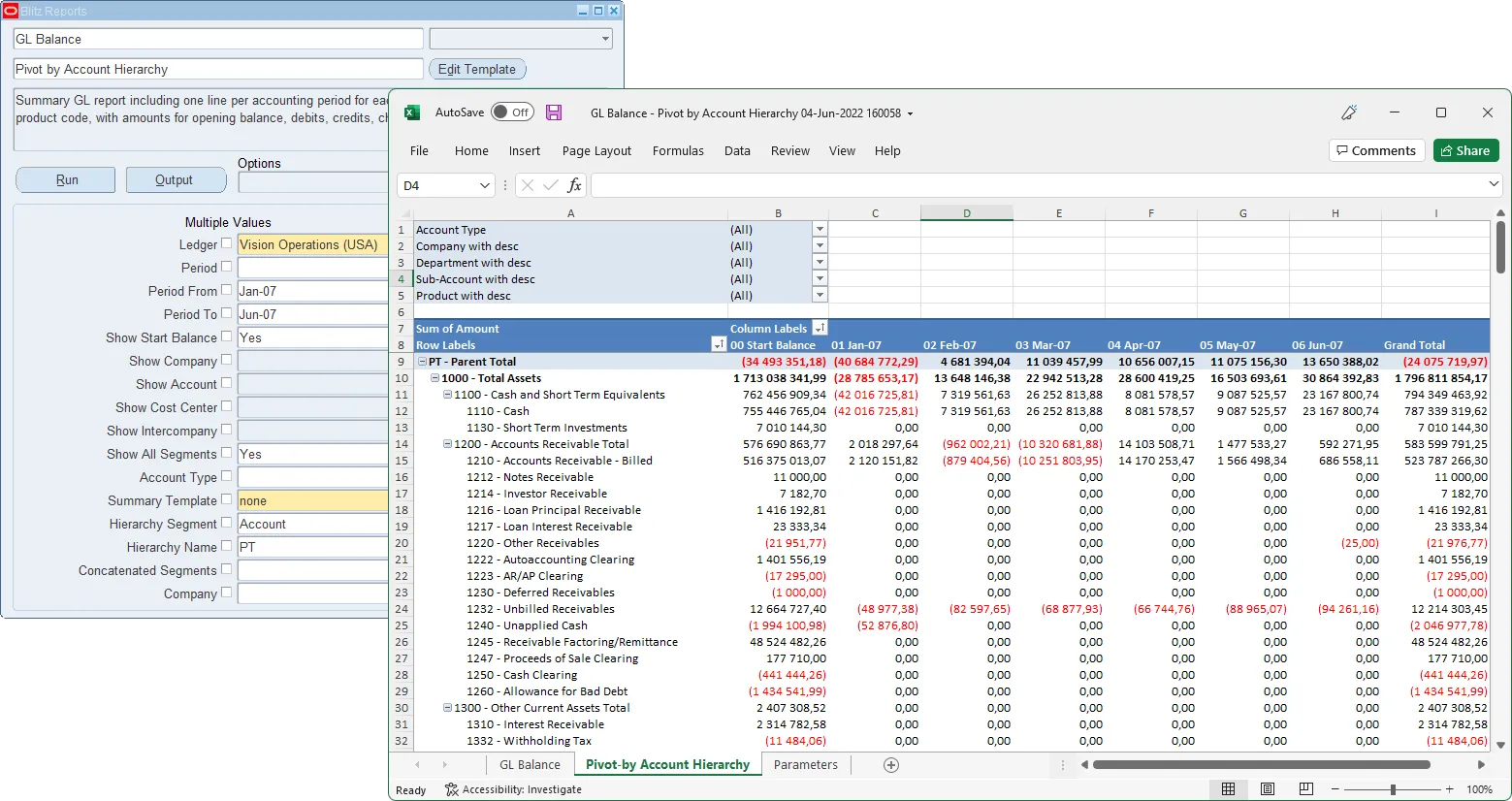
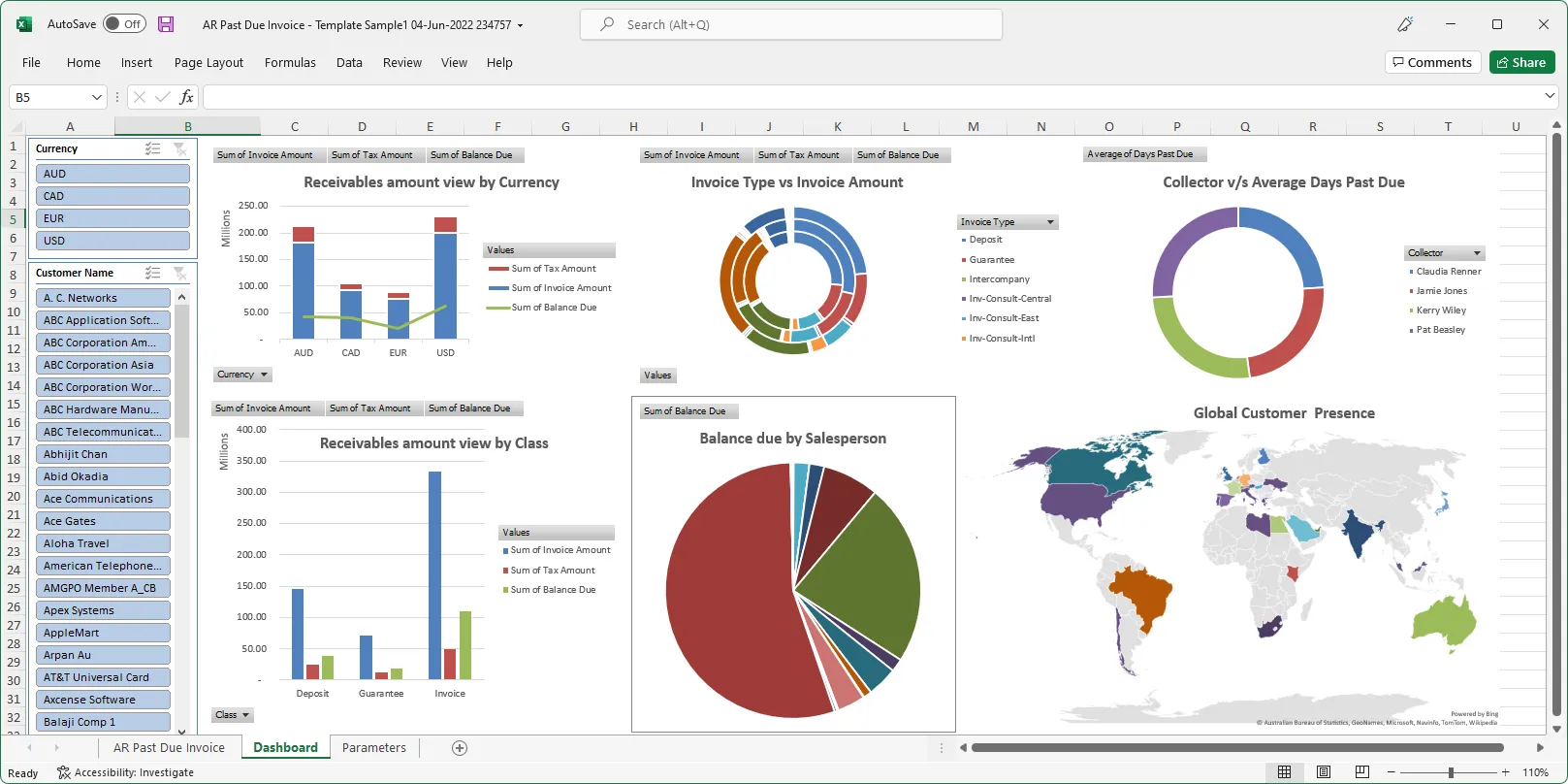
The Excel template upload functionality in Blitz Report allows users to create their own layouts by uploading an Excel template with additional sheets and charts, automatically refreshed when the report runs again. This allows to create custom dashboards and more advanced visualizations of report data.
You can download and use Blitz Report free of charge for your first 30 reports.
The installation and implementation process usually takes less than 1 hour; you can refer to our installation and user guides for specific details.
If you would like to optimize your Oracle EBS implementation and or operational reporting you can visit www.enginatics.com to review great ideas and example usage in blog. Or why not try for yourself in our demo environment.
Blitz Report™ – World’s fastest data upload and reporting for Oracle EBS
Oracle Discoverer replacement – importing worksheets into Blitz Report™
Blitz Report™ Questions & Answers
Supply Chain Hub by Blitz Report™
© 2025 Enginatics